
A New Year’s Message from our CEO, Dr David Palmer
Dear colleagues, supporters, partners and residents,
As the year draws to a close, I want to pause, not simply to mark the passing of time, but to raise a glass and honour the work, the people and the values that have carried us here.
As we look ahead to tomorrow and the start of 2026, when Mind in Bexley will celebrate 40 years of working with residents and communities in Bexley, this moment feels especially important. Anniversaries are not just about longevity; they are about purpose. And what becomes clear, looking back across four decades, is that Mind in Bexley, and now Mind in Bexley and East Kent with Revival, has never stood still. We have repeatedly chosen to innovate with integrity, guided by lived experience and grounded in community.
We began in 1986 as a small, user-led local support group. There were no strategies, no systems, no guarantees or funding tenders, just people coming together because mental health support was needed, and wasn’t there. That simple, radical act of caring and listening shaped everything that followed.
Over the years, innovation at Mind has never meant chasing trends. It has meant seeing what was missing, and building it anyway.
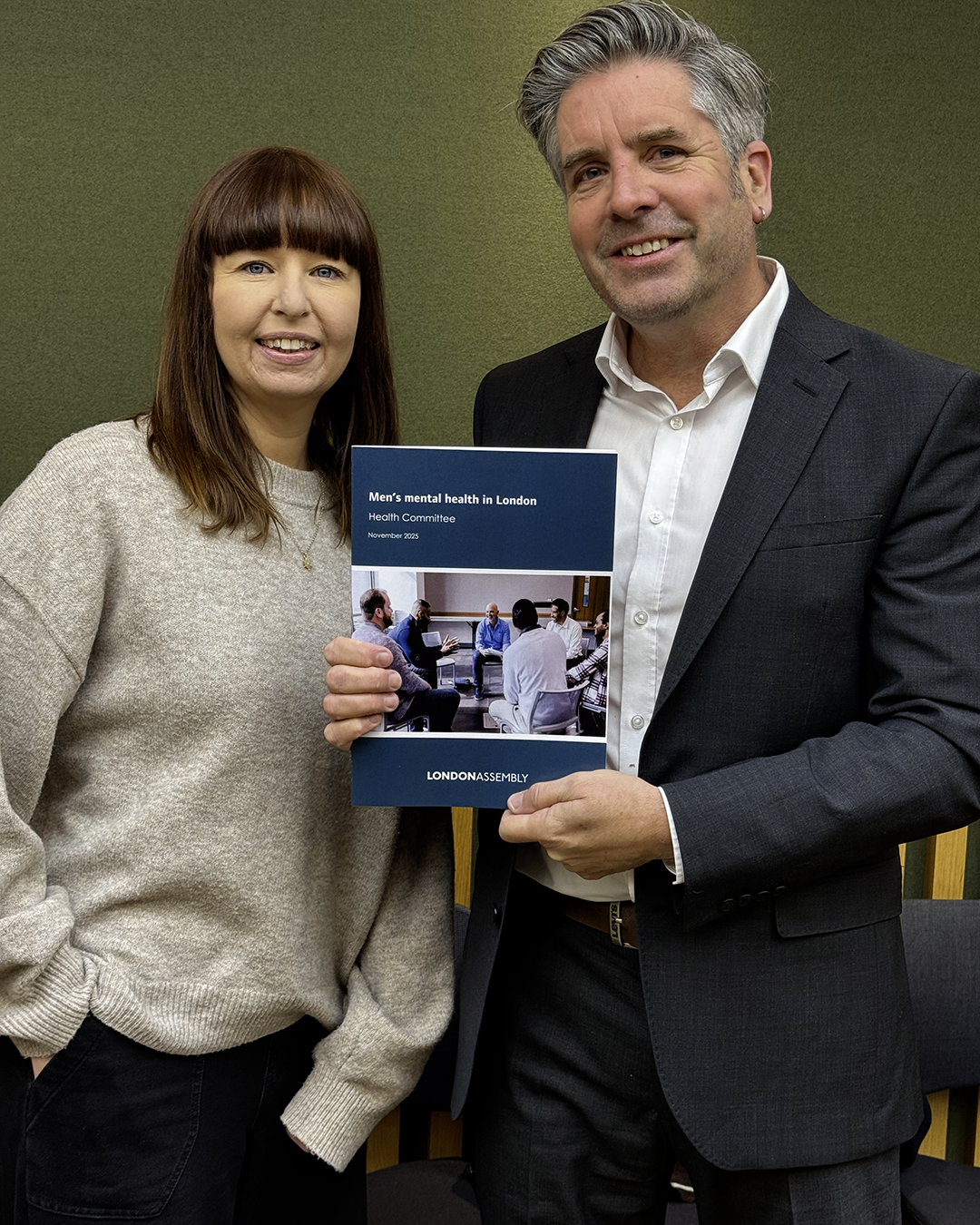
Dr David Palmer with Lucy Dodd (Mind Strategic Lead) at the launch of London Assembly’s new mental health report in November
We were early to recognise the mental health impact of poverty and inequality, developing welfare rights and debt services that secured millions of pounds for residents who were struggling, reframing financial security as a mental health intervention, long before this was widely acknowledged.
We embedded advocacy not as an add-on, but as a matter of justice, ensuring residents’ voices were heard in hospitals, forensic settings and complex systems where power is uneven.
We embraced the recovery model and peer support early, investing in befriending, mentoring and co-produced services that treated lived experience not as anecdote, but as expertise.
We worked with primary care, not around it, developing guided self-help CBT and IAPT services in partnership with local GPs, helping to shape accessible psychological support at neighbourhood level when this was still emerging nationally. This is now a huge service for us that employs over 60 people.
We took research seriously, but never extractively. Through user-led and participatory research, oral history projects and exhibitions, we made space for people to tell their own unique stories, in their own words. Projects like Minding Histories, People in Mind, Covid Stories, Home Care, and Suicide Bereavement and our extensive carers research did not just generate evidence; they challenged stigma, shaped policy conversations, and reminded systems to listen. Many of these projects resulted in funding and most have been published in academic journals.
We recognised that crisis does not only happen in clinical settings. The creation of the Bexley Crisis Cafe, and later the crisis cafe in Ramsgate, Kent, showed that out-of-hours, relational, non-clinical support saves lives, and that community can be a place of safety. This work helped shape the development of the Integrated Mental Health Hub, bringing statutory and voluntary sector partners together around shared responsibility, trust and local care.
And then there is Revival, our brilliant creative social enterprise initiative. Setting up Revival was a bold act of imagination. It asked a different question: what if mental health support looked like music, food, creativity, welcome and belonging? What if wellbeing was built through culture, community and everyday connection, not just services? Revival in Bexley, and later in Whitstable, has shown that social enterprise can be care infrastructure, a place where people arrive as whole human beings, not problems to be fixed.
We invested not only in services, but in infrastructure. The decision to purchase Devonshire Road, Bexleyheath and later 56 High Street, Whitstable (Revival), ensured that the organisation had a permanent base, a place of welcome, creativity and stability, rooted in the community for years to come
We looked beyond Bexley too. The establishment of East Kent Mind in 2019, investment in Whitstable Canterbury, Ramsgate and coastal communities, work with the University – Kent Community Oasis Garden, and the development of green, cultural and community-led spaces recognised that inequality, isolation and mental distress do not stop at borough boundaries. These were deliberate, values-led decisions to grow responsibly and equitably.
Alongside this, we have played an active leading role in the development of Mind in London, Kent and national Mind initiatives, sharing learning, shaping practice, and contributing to wider conversations about community mental health, prevention and innovation.
More recently, our work has been recognised through system leadership roles, including ICB recognition of the Clinical Care Professional Lead (CCPL) role, the London Assembly, and Kings Health Partners, reflecting trust in the organisation not just as a provider, but as a partner, convener and strategic voice within integrated care systems.
None of this happened by accident. It happened because staff, volunteers and lived-experience leaders, trustees and management committees and supporters including our friends Moracle Ltd who were willing to try new things, to sit with uncertainty, and to trust relationships.
This year alone, you have all lived those values, in the Crisis Cafe open every night of the year; in carers’ groups holding grief, exhaustion and love; in Talking Therapies supporting residents in distress, in Digital Hubs supporting people who have been left behind; in the Pantry providing much needed support to residents in need, in Revival filled with conversation and music; in research, advocacy, listening, and countless acts of quiet care that will never appear in a timeline, but matter deeply.
This year we also lost Andy Runeckles, a friend, colleague and constant support to so many carers, and his absence leaves a deep and lasting hole in our community. He will never be forgotten.
As we move into the next chapter, our 2025–30 strategy gives us a very strong and confident direction. It commits us to:
- prevention and early intervention
- integrated neighbourhood care
- stronger support for carers
- tackling inequalities in physical and mental health
- digital inclusion rooted in trusted relationships
- and continued system leadership grounded in lived experience
This is not a break from our past, it is its natural continuation.
T.S. Eliot (Little Gidding) wrote:
“We shall not cease from exploration
And the end of all our exploring
Will be to arrive where we started
And know the place for the first time.”
As 2025 ends, I hope staff feel pride in what you have given, and confidence in what we are building together. Forty years on, our work continues, courageous, creative, and rooted in our community.
With warmest wishes, good health and happiness for the year ahead,
Dr David Palmer
CEO, Mind in Bexley and East Kent